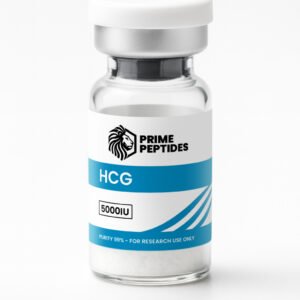

Human chorionic gonadotropin (HCG) is a naturally occurring placental glycoprotein hormone that interacts with the luteinizing hormone/choriogonadotropin receptor (LHCGR). It is structured as a disulfide-rich heterodimer composed of a common 92-amino-acid alpha subunit and a unique 145-amino-acid beta subunit. In preclinical research, HCG is used to explore luteinizing hormone receptor signaling, reproductive endocrinology, paracrine crosstalk, and angiogenic pathways.
Chemical Structure of HCG:
HCG is a heterodimeric glycoprotein (~37.9 kDa molecular mass, ~30% carbohydrate by weight) composed of: Alpha subunit: 92 amino acids, shared among LH, FSH, TSH, and HCG. Beta subunit: 145 amino acids, including a unique 24-residue C-terminal peptide (CTP) that extends its half-life. Glycosylation: Eight carbohydrate chains (two N-linked on α, two N-linked plus four O-linked on β) improve stability and bioavailability. Cystine-knot motif: Both subunits feature three disulfide bonds forming a rigid tertiary structure crucial for receptor binding.